


ATI Blog Detail

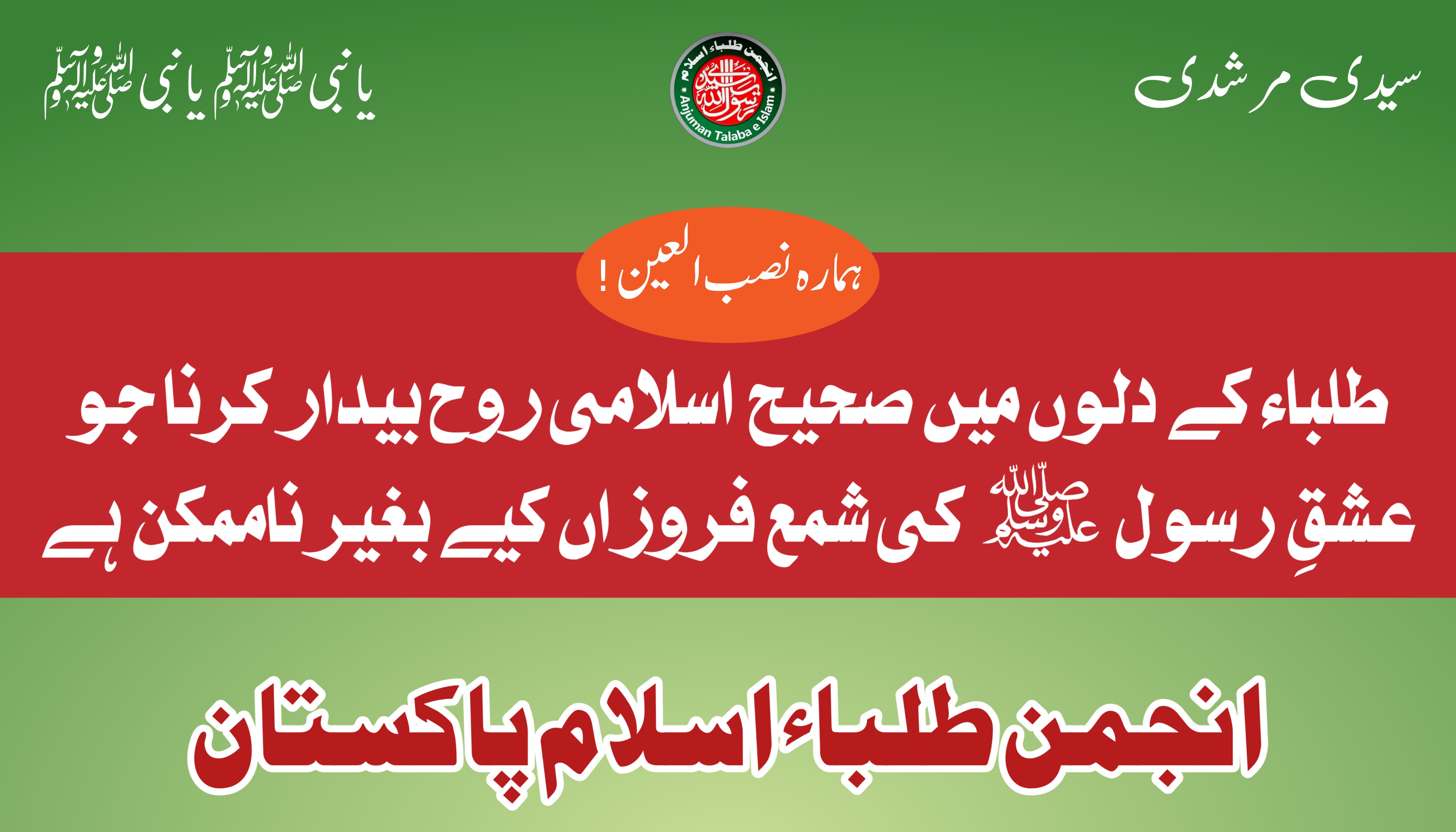
 BY: Junaid Ahmed
Legacy of Light — The Founding Vision of Anjuman Talaba-e-Islam Pakistan
Introduction: A Spark That Ignited a Movement
In the heart of Pakistan’s academic and spiritual landscape, a movement was born—not out of political ambition, but out of a deep yearning to preserve Islamic identity, empower students, and serve society. Anjuman Talaba-e-Islam (ATI) Pakistan emerged as a beacon of faith-driven activism, rooted in the Barelvi tradition and committed to nurturing ethical leadership among youth.
Historical Context: Student Movements in Pakistan
Pakistan’s universities have long been fertile ground for ideological expression. From leftist student federations to religious student bodies, the post-independence era saw a surge in youth-led activism. Amid this dynamic environment, ATI was founded in 1968 as a response to the growing secularization and political polarization on campuses.
Unlike other student organizations, ATI chose a path of spiritual revival and peaceful advocacy. It was not merely a reaction—it was a vision.
The Barelvi Identity and Spiritual Roots
ATI’s foundation is deeply intertwined with the Barelvi school of thought, which emphasizes love for the Prophet Muhammad ﷺ, reverence for saints, and adherence to traditional Sunni practices. This spiritual grounding gave ATI a unique identity among student groups.
Rather than engaging in confrontational politics, ATI focused on character-building, religious education, and community service. Its members were known not just for their activism, but for their adab (etiquette), ikhlas (sincerity), and ilm (knowledge).
Founding Principles: Faith, Unity, and Action
ATI’s motto—“Iman, Ittehad, Amal” (Faith, Unity, Action)—is more than a slogan. It’s a roadmap.
- Faith (Iman): ATI promotes a life centered around Islamic values, encouraging students to integrate spirituality into their academic and social lives.
- Unity (Ittehad): ATI bridges divides—sectarian, ethnic, and regional—by fostering a sense of brotherhood among students.
- Action (Amal): ATI believes in practical service, whether through welfare projects, educational seminars, or peaceful advocacy.
Early Challenges and Triumphs
The early years were not easy. ATI faced resistance from rival student groups, administrative pushback, and ideological skepticism. Yet, through perseverance and principled conduct, it gained respect across campuses.
One of ATI’s earliest victories was securing prayer spaces and religious accommodations in universities—small wins that had lasting impact.
Expansion Across Campuses
From its humble beginnings in Karachi and Lahore, ATI expanded to major universities across Pakistan. Its organizational structure grew to include:
- City Units: Local chapters in urban centers
- Campus Units: Active bodies in universities and colleges
- Central Executive Council: The national leadership overseeing strategy and coordination
This decentralized model allowed ATI to remain agile and responsive to local needs while maintaining a unified national vision.
The Role of Scholars and Ideologues
ATI has always maintained close ties with Islamic scholars, particularly those aligned with the Barelvi tradition. These scholars provide spiritual guidance, theological clarity, and mentorship to student leaders.
Figures like Allama Shah Ahmad Noorani and Mufti Muneeb-ur-Rehman have historically supported ATI’s mission, reinforcing its legitimacy and influence.
Legacy in Modern Times
Today, ATI stands as one of the few student organizations that has maintained its ideological purity and grassroots relevance. While others have faded or become politicized, ATI continues to:
- Organize Qur’an study circles
- Host interfaith dialogues
- Lead welfare initiatives
- Advocate for student rights without partisan affiliations
Its alumni include scholars, educators, social workers, and professionals who carry ATI’s values into every sphere of life.
Continuing the Mission
ATI’s legacy is not static—it’s evolving. In the digital age, ATI is embracing new tools to reach students:
- Social Media Campaigns: Promoting Islamic ethics and student awareness
- Online Learning Platforms: Offering religious and leadership training
- Collaborations: Partnering with NGOs and academic institutions for broader impact
Yet, the core remains unchanged: faith-driven service.
Conclusion: A Light That Still Guides
Anjuman Talaba-e-Islam Pakistan is more than an organization—it’s a movement of hearts. It reminds us that leadership begins with character, that activism must be rooted in ethics, and that students are not just future leaders—they are today’s changemakers.
As ATI continues its journey, it carries the torch lit decades ago—a legacy of light that still guides, still inspires, and still transforms.

Every Prayer, A Step Closer to Allah
📆 Today: 6 Muḥarram 1448 AH - Sunday 21 June 2026
📍 Prayer Times in Karachi, Pakistan
- Fajr:04:14 AM
- Imsak:04:04 AM
- Dhuhr:12:33 PM
- Asr:03:55 PM
- Maghrib:07:24 PM
- Isha'a:08:53 PM